I have wide ranging research interests, but my current projects include:
Normative Perspectives on Formalization
This project considers the benefits and risks associated with formalization, mathematization, and quantification, especially in social science contexts. I draw on philosophy of applied mathematics, discussions of idealization and axiomatization in science, feminist philosophy, and epistemologies of ignorance to give a novel interpretation to questions about the normative dimensions of formalization. For example, in this paper, I use philosophy of applied mathematics to develop the idea that questions about the mathematization of economics can be understood as questions about the aptness of the idealizations necessary for applying the mathematical tools in question. And in a second paper, I use feminist epistemology to consider the evaluation of simple, highly idealized models used in the social science context.
The Ethics of Optimality: Values and Formalization in Social Decision-Making
This project considers a class of decision methods such as cost-benefit analysis (CBA) in which decisions are based on maximizing a quantified good, and focuses on the problem that such methods may ignore fundamental ethical values such as justice, fairness, and equity. For example, if gains go to the already well-off, a change may be an overall improvement but may also increase inequality and thus injustice. Building on my previous research on value pluralism, I use research in ethical theory, metaethics, philosophy of economics, and legal theory to evaluate responses to this problem, including one response that incorporates moral preferences — such as a “taste” for fairness — into the CBA process itself and another that restricts policy interventions to Pareto improvements, where no one is made worse off. Ultimately, I claim that results of quantified optimality should be used as only one component in political decision-making processes and cannot replace the political process with a formal, quantificational method.
Algorithmic Unfairness and Cumulative Inequities
It is well-known that machine learning algorithms and AI systems using big data can produce results that are biased, unfair, or discriminatory, even when information about socially salient characteristics is excluded. However, algorithmic fairness discussions are often dominated by statistical definitions of fairness, many of which hinge crucially on accuracy and inaccuracy rates. This project explores the ways that these ways of framing the issues sideline the amplification of inequity that can arise even when accuracy is perfect and error rates are zero. For example, this paper, co-authored with Alysha Kassam, pays particular attention to structural theories of racism and the problem of “proxy discrimination” — the problem that even when an algorithm has no information about socially sensitive features, correct predictions can amplify existing inequities. Work in progress asks what our forward-looking responsibilities are in the face of algorithmic cumulative inequities.
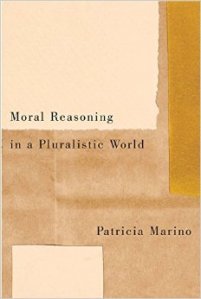
My first book Moral Reasoning in a Pluralistic World (McGill-Queen’s University Press, 2015) addresses the question: How should we reason morally in a pluralistic world, in which we share multiple values (honesty, fairness, benevolence etc.) but interpret and prioritize these in different ways?
Reviews of Moral Reasoning in a Pluralistic World:
My second book Philosophy of Sex and Love: An Opinionated Introduction (Routledge Press, 2019), explores basic issues surrounding sex and love in today’s world, such as consent, objectification, non-monogamy, racial stereotyping, and the need to reconcile contemporary expectations about gender equality with our beliefs about how love works.
Publications
Books
Philosophy of Sex and Love: An Opinionated Introduction (Routledge Press, 2019) [Amazon, Indigo].
Moral Reasoning in a Pluralistic World (McGill-Queen’s University Press, 2015) [Amazon, Indigo].
Selected articles and book chapters [or see my CV].
“Idealized Models, Counterfactual Reasoning, and Inductive Risk in Social Science Contexts: The Case of Minimal Models for Inequity. Philosophy of the Social Sciences, forthcoming.
“Formalism in Economics: Perspectives from Philosophy of Mathematics.” Economics and Philosophy (2026):1-19. [preprint].
“Minimal Models, Feminist Epistemology, and Diversity.” Journal of Economic Methodology (2025): 1-15 [preprint].
“Cost-Benefit Analysis, Ethical Values, and a ‘Taste’ for Fairness.” Journal of Economic Methodology 32, no. 3 (2025): 225-238 [preprint].
“Algorithmic Racial Discrimination: A Social Impact Approach” (co-authored with Alysha Kassam), Feminist Philosophy Quarterly 8 (2022).
“Objectification: Conceptual and Normative Groundwork” in Clare Chambers, Brian Earp, and Lori Watson, Routledge Handbook on the Philosophy of Sex and Sexuality (Routledge, 2022).
“Sexual Use, Sexual Autonomy, and Adaptive Preferences: A Social Approach to Sexual Objectification,” in David Boonin, ed., Palgrave Handbook of Sexual Ethics (Palgrave, 2022).
“Value Pluralism and the Foundations of Normative Law and Economics: The Case of Threshold Deontology,” Magdalena Małecka and Peter Cserne, eds., Law and Economics as Interdisciplinary Exchange (Routledge, 2020) [postprint].
“What Is the ‘Social’ in “Social Coherence?” Commentary on Nelson Tebbe’s Religious Freedom in an Egalitarian Age, Journal of Civil Rights and Economic Development 31 (2018) [link, postprint].
“Value Pluralism, Moral Diversity, Moral Reasoning, and the Foundations of Bioethics,” Journal of Ethics, Medicine and Public Health 3/4 (2017), 477-485 [link, postprint].
“Love and Economics,” in Christopher Grau and Aaron Smuts, eds., Oxford Handbook for the Philosophy of Love (Oxford University Press, forthcoming) [link, preprint].
“Ethical Implications of Scientific Imperialism: Two Examples from Economics,” in Manuela Fernández Pinto and Uskali Mäki, eds., Scientific Imperialism: Exploring the Boundaries of Interdisciplinarity (Routledge, 2017) [preprint].
“Internal to What? Contemporary Naturalism and Putnam’s Model Theoretic Argument” in Sandy Goldberg, ed., The Brain in a Vat (Cambridge University Press, 2016) [preprint].
“Philosophy of Sex,” Philosophy Compass 9/1 (2014), 22-32 [link, preprint].
“Moral Coherence and Principle Pluralism,” Journal of Moral Philosophy 11/6 (2014), 727–749 [link, postprint].
“Moral Coherence and Value Pluralism,” Canadian Journal of Philosophy 43 (2013), 117-135 [link, postprint].
“Ambivalence, Valuational Inconsistency, and the Divided Self,” Philosophy and Phenomenological Research 83 (2011), 41-71 [link] [post-print].
“Moral Rationalism and the Normative Status of Desiderative Coherence,” The Journal of Moral Philosophy 7 (2010), pp. 227-252 [link, post-print].
“Representation-Friendly Deflationism vs. Modest Correspondence” in Cory Wright and Nikolaj Pedersen, eds., New Waves in Philosophy: Truth (New York: Palgrave McMillan, 2010), 218-231 [post-print].
“On Essentially Conflicting Desires,” The Philosophical Quarterly 59 (2009), 274-291 [link, post-print].
Toward a Modest Correspondence Theory of Truth: Predicates and Properties,” Dialogue: Canadian Philosophical Review 41 (2008), 81-102 [link, post-print].
“The Ethics of Sexual Objectification: Autonomy and Consent” Inquiry 51 (2008), 345 – 364 [link, post-print].
Seeking Desire: Reflections on Blackburn’s Lust,” Social Philosophy Today 22 (2007), 219-230 [link, post-print].
“Expressivism, Logic, Consistency, and Moral Dilemmas,” Ethical Theory and Moral Practice 9 (2006), 517-533 [link, post-print].
“What Should a Correspondence Theory Be and Do?” Philosophical Studies, 127 (2006), 415-457 [link, post-print].
“Expressivism, Deflationism, and Correspondence,” The Journal of Moral Philosophy, 2 (2005), 171-191 [link, post-print].
“Moral Dilemmas, Collective Responsibility, and Moral Progress,” Philosophical Studies, 104 (2001), 203-225 [link, post-print].
Selected recent presentations:
- “Idealized Models, Counterfactual Reasoning, and Inductive Risk in Social Science Contexts”
- Philosophy of Social Science Roundtable, March 2026.
- Monfort Workshop on Idealization and Values in Policymaking, Colorado State University, April 2026.
- “Modelling Minimal Conditions: Predictive Counterfactuals, Problems of Contingencies, and a Role for Imaginary Futures”
- Philosophy, Politics and Economics Society meeting, November 2025.
- “Formal Models in Philosophy: What-If Inferences, Evaluating Social Interventions, and the Problem of Chameleons”
- The Syntax and Semantics of Formalisations in Philosophy (SSFP), Munich, June 2025.
- “How-Possibly Explanations, What-If Inferences, and the Problem of Stable Regularities”
- European Network for the Philosophy of Social Science conference, Bergen, August 2024.
- Philosophy, Politics, and Economics Society Meeting, November 2024.
- “QALYs, Discrimination, and “Whom Should We Ask?”: A Novel Application of Sympathetic Extended Preferences
- Formal Ethics conference, Greifswald, Germany, July 2024.
- “Pareto Optimality and Oppression”
- American Philosophical Association, Eastern Division Meeting, January 2024.
- Philosophy, Politics and Economics Society meeting, November 2023.
- 7th International Conference Economic Philosophy, Reims, May 2024.
- Canadian Philosophical Association, June 2024.
Page last updated Aug 17, 2026